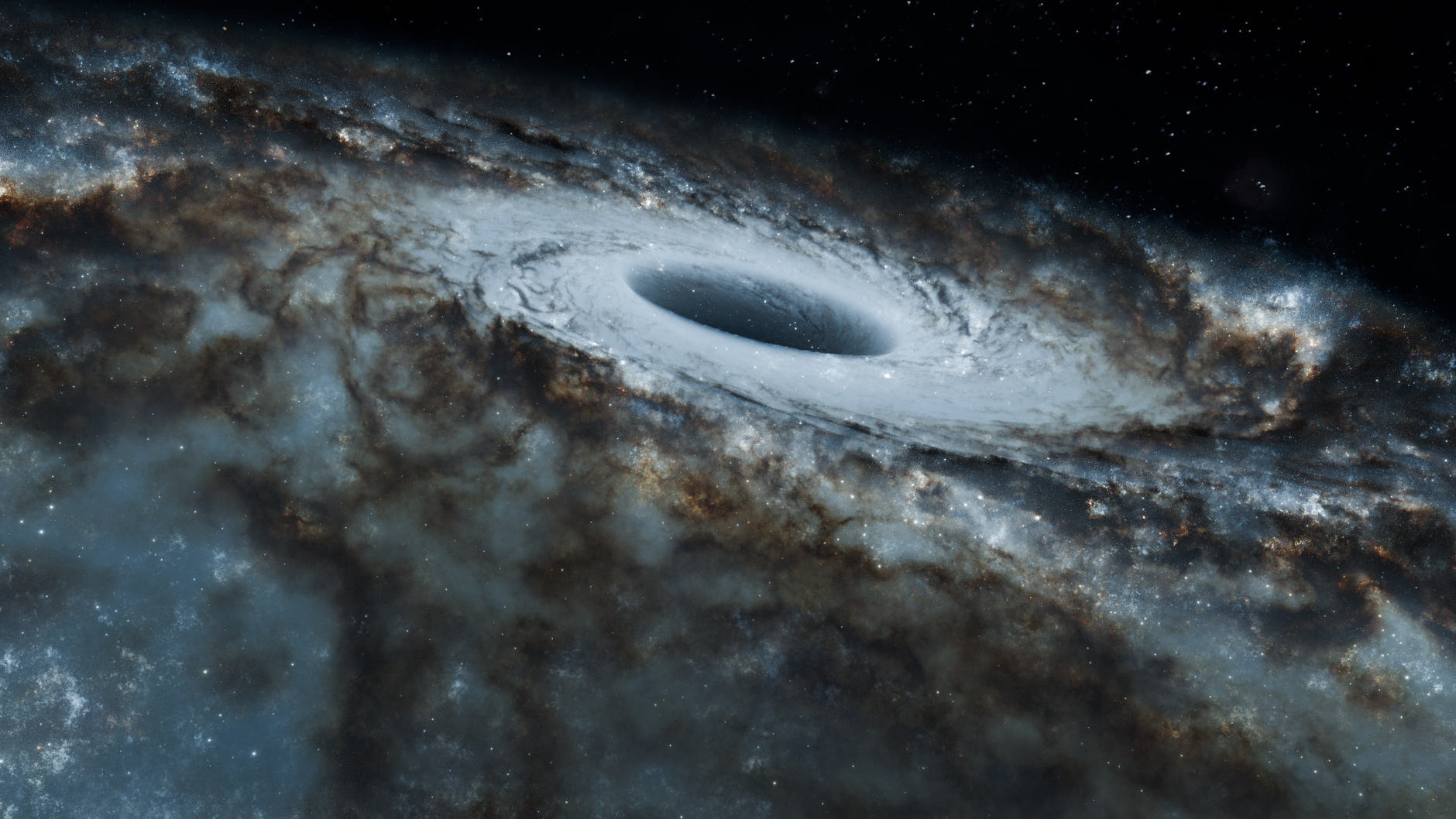
The black hole event horizon has been analogously created using vibrating mirrors of light. This groundbreaking development opens new avenues for understanding complex astrophysical phenomena.
Understanding Black Hole Event Horizon
The concept of a black hole event horizon can be quite complex, but recent experiments have made it more tangible. Researchers have been exploring how light behaves near this critical boundary, where not even light can escape a black hole’s grasp. By using vibrating mirrors, scientists have created an analog that simulates the effects of a black hole event horizon.
These mirrors oscillate at specific frequencies, mimicking the gravitational pull of a black hole. When light interacts with these vibrating surfaces, it produces fascinating phenomena that resemble what occurs near a true event horizon.
Key findings from this research include:
- Wave Behavior: Light waves can be affected in ways similar to their behavior near a black hole.
- Energy Transfer: The interaction between light and the mirrors reveals how energy can be converted and lost.
- Understanding Gravity: This setup helps scientists explore the fundamental principles of gravity and spacetime.
This experimental approach not only enhances our understanding of black holes but also opens new avenues for research in theoretical physics.
The Science Behind Vibrating Mirrors
The study of vibrating mirrors has opened up new avenues in understanding complex phenomena, including the enigmatic black hole event horizon. Researchers have demonstrated that these mirrors can create an analog to a black hole, allowing scientists to explore the effects of gravitational forces in a controlled environment.
When light interacts with a vibrating mirror, it reflects in a manner that simulates the dynamics of a black hole’s event horizon. This interaction leads to fascinating effects, such as:
- Hawking radiation: The theoretical prediction that black holes emit radiation can be tested through the behavior of light in this setup.
- Redshift phenomena: Observing how light waves stretch as they approach the vibrational frequency of the mirror mimics what occurs near a black hole.
- Quantum fluctuations: The mirrors enable scientists to examine quantum effects that arise near the event horizon.
By studying these vibrating mirrors, researchers hope to gain deeper insights into the nature of black holes and their event horizons, bridging the gap between theoretical physics and experimental validation.
Implications for Astrophysics
The study of vibrating mirrors has profound implications for astrophysics, particularly in understanding the black hole event horizon. By creating an analog of this cosmic boundary in a controlled environment, researchers can explore phenomena that are otherwise impossible to observe directly in space.
These experiments open up new pathways for investigating the fundamental principles of physics. For instance, they allow scientists to test theories related to the behavior of light and gravity in extreme conditions that mimic those near a black hole event horizon. This can lead to a better understanding of how information is lost or preserved in black holes, a topic that remains one of the biggest mysteries in modern astrophysics.
Furthermore, the use of vibrating mirrors can shed light on the nature of Hawking radiation, a theoretical prediction about black holes that suggests they can emit radiation due to quantum effects. By simulating the event horizon in a laboratory, physicists hope to gather data that could confirm or refute existing theories.
In summary, the implications of these findings extend beyond mere observation, potentially reshaping our understanding of the universe.
How Light Behaves in This Experiment
In the recent experiment involving vibrating mirrors, researchers have gained insights into how light behaves near a black hole event horizon. This phenomenon can be observed by examining the effects of the mirrors’ rapid vibrations on the light waves emitted towards them.
When light travels toward the vibrating mirrors, it experiences a shift in frequency, a phenomenon known as the Doppler effect. As the mirrors oscillate, they create conditions analogous to those found at a black hole event horizon, where light cannot escape due to immense gravitational pull. The mirrors essentially simulate this environment, allowing scientists to study light’s behavior without the need for a real black hole.
This experiment illustrates several key principles:
- Frequency Shift: Light emitted towards the moving mirrors is shifted in frequency, resembling the effects seen near a black hole.
- Energy Dynamics: The interaction between light and the mirrors showcases how energy is transformed in extreme conditions.
- Analog Models: Using mirrors to simulate a black hole event horizon opens new pathways for understanding fundamental physics.
These findings not only deepen our understanding of light but also enhance our grasp of black hole physics and its implications for the universe.
Potential Applications in Physics
The exploration of vibrating mirrors that simulate a black hole event horizon opens up exciting potential applications in physics. Researchers are beginning to uncover how these analogs can enhance our understanding of fundamental concepts in both quantum mechanics and general relativity.
- Testing Quantum Theories: By using vibrating mirrors, scientists can test predictions made by quantum theory in a controlled environment, providing insight into the behavior of particles near extreme gravitational fields.
- Studying Hawking Radiation: The experiments may shed light on Hawking radiation, a theoretical prediction that black holes emit radiation due to quantum effects near their event horizons. Understanding this radiation in a lab setting could lead to breakthroughs in theoretical physics.
- Developing New Technologies: The principles derived from these studies might also inspire novel technologies in communication and information processing, leveraging the unique properties of light and gravity.
- Enhancing Cosmological Models: Insights gained from these experiments could refine existing cosmological models, helping to bridge gaps between observable phenomena and theoretical frameworks.
As research progresses, the implications of vibrating mirrors in relation to black hole event horizons may transform various fields of physics.
Recent Discoveries in Black Hole Research
Recent discoveries in black hole research have shed light on the intriguing concept of the black hole event horizon. Scientists have been exploring the behavior of light and its interaction with vibrating mirrors, leading to significant advancements in our understanding of this cosmic phenomenon.
In a groundbreaking experiment, researchers created an analog of a black hole event horizon using finely tuned mirrors that vibrate at specific frequencies. This setup mimics the gravitational effects of a black hole, allowing scientists to observe how light behaves as it approaches the event horizon.
The findings have been promising, revealing that the vibrating mirrors can create conditions similar to those found near a black hole. As light encounters these mirrors, it exhibits behaviors analogous to what occurs near an actual event horizon, such as redshift and wave distortion.
These recent advancements are not only enhancing our theoretical understanding but also opening new avenues for potential applications in physics, including the development of novel technologies that harness these unique properties of light. The ongoing research emphasizes the critical role of analog systems in exploring the complexities of astrophysics.
Future of Light Manipulation Technology
The future of light manipulation technology holds exciting possibilities, particularly in the realm of black hole event horizons. As researchers continue to explore vibrating mirrors, the potential applications could revolutionize our understanding of light and its interactions with gravity.
One promising avenue is the development of advanced communication systems that utilize light manipulation to enhance data transmission. By creating conditions that mimic a black hole event horizon, scientists can develop methods to control and redirect light in unprecedented ways, leading to faster and more secure communication networks.
Additionally, the principles derived from these experiments may pave the way for new types of sensors. These sensors could detect minute changes in gravitational fields, offering insights into cosmic phenomena and aiding in the search for gravitational waves.
Moreover, as our understanding of the black hole event horizon deepens, it may also influence technology in fields such as quantum computing and imaging. The ability to manipulate light with precision could lead to breakthroughs that enhance computational power and imaging techniques, ultimately pushing the boundaries of modern physics.
In summary, the future of light manipulation technology appears bright, with the potential to unlock mysteries surrounding black holes and beyond.
Photo by Iceberg San on Pexels
Read the original
Related stories
Motorola foldable phone: Is it the best new device? · Moto Watch 2 Fit: Best Online Price in India Today · Remote Sensing Satellites: What Are the Best Options Available?
Leave a Reply